
What is Diabetes?
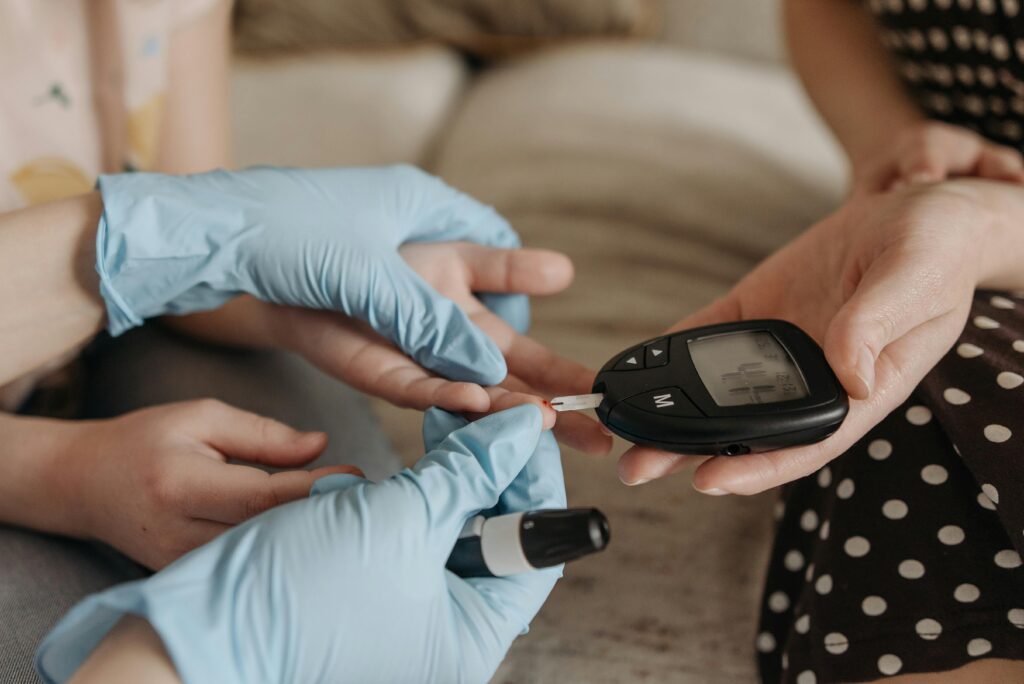 Diabetes is a long-term condition where your blood sugar (also called blood glucose) becomes too high. This happens because:
- Your body doesn’t make enough insulin
- Your body can’t use insulin properly.
Insulin is a hormone made by the pancreas. It helps move sugar from the food you eat into your cells, where it’s used for energy. Without enough insulin, sugar stays in your blood, which can cause health problems over time.
Common Types of Diabetes
- Type 1 diabetes – caused by the immune system attacking the cells in the pancreas impacting on ability to produce insulin. This type cannot be prevented.
- Type 2 diabetes – the most common type. Linked to age, weight, family history, and ethnicity. Type 2 Diabetes can be reversed – remission is seen with a reduction in weight, change in diet and increase in levels of physical activity.
- Gestational diabetes – develops during pregnancy and usually goes away after birth but increases the risk of type 2 later in life.
- Pre-diabetes – not diabetes, but blood sugar levels are higher than normal. It means you’re at greater risk of developing type 2 diabetes, but with healthy lifestyle changes, you may be able to bring your blood sugar back to normal.
- Gestational diabetes (GD) is a type of diabetes that develops during pregnancy. It is characterised by high blood sugar (glucose) levels that typically emerge during the second or third trimester. Gestational diabetes differs from other forms of diabetes as it is linked to the hormonal changes and physiological shifts that happen during pregnancy. *Details can be found under the family planning section*.
Please note there are other less common types of diabetes, there can be found under the ‘Other types of Diabetes’ tab.
Reducing your risk
You can’t prevent type 1 diabetes, but you can lower your risk of type 2 and gestational diabetes by:
- Eating a balanced diet
- Exercising regularly
- Keeping to a healthy weight
If you’re worried about diabetes or your risk, talk to your healthcare team or GP, they can give you advice and support.
