
Alesha’s story
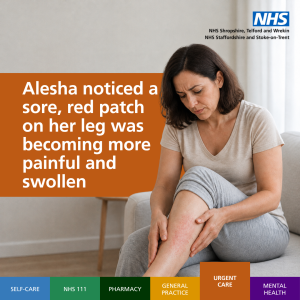
A few days after noticing a sore, red patch on my leg, it became increasingly painful and swollen. By the weekend, I also had a high temperature and knew I needed medical advice.
I was not sure which NHS service to use, so I contacted NHS 111. They asked me about my symptoms and directed me to an Urgent Treatment Centre (UTC).
At the UTC, a healthcare professional assessed the infection and explained what treatment I needed and what warning signs to look out for. They also told me what to do if my symptoms became worse.
I had always associated urgent care with injuries, so I did not realise that an Urgent Treatment Centre could also help with illnesses that need urgent attention.
Contacting NHS 111 first helped me get advice and find the right service for my needs.
What can Urgent Treatment Centres help with?
Urgent Treatment Centres can assess and treat a range of urgent, non-life-threatening illnesses and injuries, which may include:
- Minor infections
- Earache and sore throats
- Minor skin conditions
- Cuts, burns and wounds
- Sprains and strains
- Suspected minor broken bones
The services and facilities available can vary. If you need urgent medical help but are unsure where to go, visit 111.nhs.uk or call 111.
NHS 111 can assess what help you need and direct you to the most appropriate service, which may include an Urgent Treatment Centre appointment.
For a serious or life-threatening emergency, call 999 or go to A&E.
For more information, visit thinkwhichservice.co.uk.
Think: Right Help, Right Time, First Time.
For more information about choosing the right NHS service, visit www.thinkwhichservice.co.uk
