
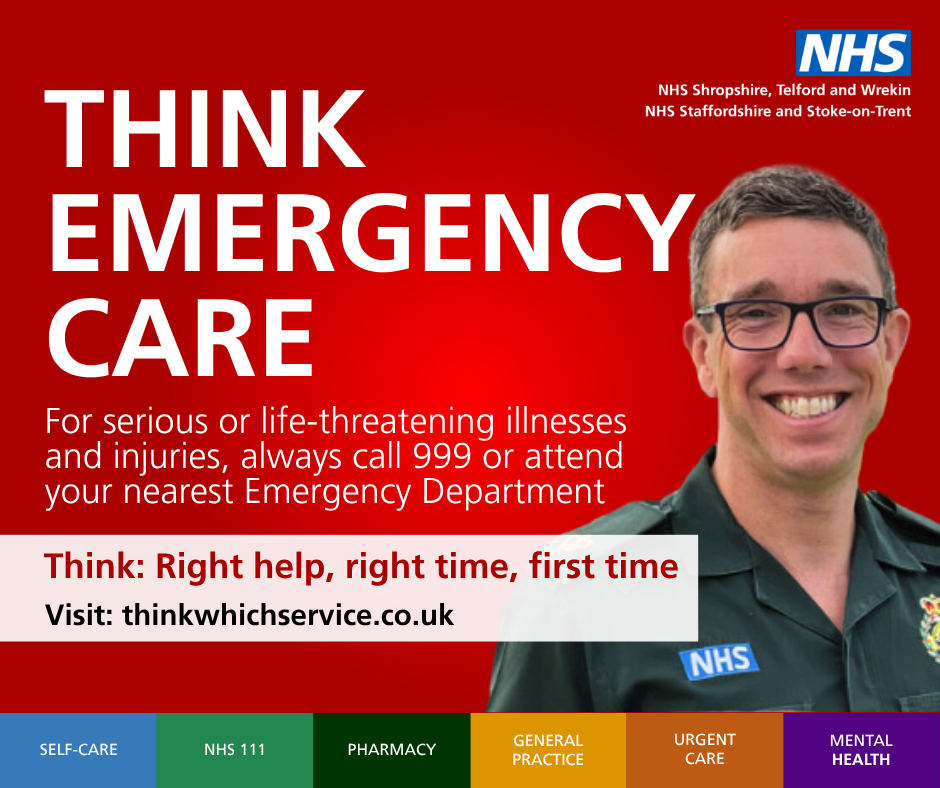
Think Emergency Care
 Life-threatening emergency?
Emergency Departments and 999 services are for serious and life-threatening illnesses and injuries.
Using other NHS services for non-life-threatening conditions helps ensure emergency care is available for people who need it most.
When to call 999 or go to A&E (Emergency Department)
Call 999 or go to your nearest A&E (Emergency Department) immediately if you or someone has:
-
- Signs of a heart attack
- Signs of a stroke
- Sudden confusion
- Severe difficulty breathing
- Choking
- Heavy bleeding that cannot be stopped
- Severe injuries or major trauma
- A seizure that is not stopping
- Sudden, rapid swelling (such as a severe allergic reaction)
- Loss of consciousness
- Severe burns or scalds
Accessible emergency services
- British Sign Language (BSL) speakers can make a BSL video call to 999.
- Deaf people can use 18000 to contact 999 using text relay
For more information, visit When to go to A&E - NHS (www.nhs.uk)
